Tuesday, January 31, 2017

THE MILAM SISTERS


Miss Eve and Miss Edna  Milam---whose invitations and most mail, unless an individually-addressed note, were addressed to The Misses Eve and Edna Milam---were two getting-there maiden ladies who kept cats.    They were the only people in Paxton with THE in front of their names, and the only nearby one was The Right Rev. at the Presbyterian in Expedia, the next-town-over.

The ladies and the myriad cats and one old lump of a dog lived over by the Methodist, in a small gray house with a little porch.   There were quite a few bird-feeders around their house for the amusement of the cats, and the ladies had had Havlon Bright in to bump all the windowsills a foot out into the room and stretch indoor/outdoor carpet on the boards, so that all their kitties would have ringside seats to all the activity out in the yard.   On any day of the year, a group of little faces were aimed at the bird-centers, and at twilight, the still silhouettes outlined against the lamplight of that tall thin house with the two little chimneys caused many of the town’s young folk to call it The Halloween House.

Miss Eve was tallish, a spare, lank woman in print  shirtwaist dresses cinched with a matching belt and nearly-always-matching shoes.   She’d always leant toward pretty wedge-heels, and had a pair of canvas ones in almost every color she could find.   She knew her looks were nothing to boast, but she was proud of her beautiful shoes.  On most other women, the bright canvas shoes would have connoted a snap of gum and big chunky plastic earrings, but shoes were her only vanity.
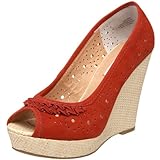

Though she had not a flirtatious bone in her body, she had a way of sliding her feet way forward under her big metal desk at the Mayor’s office, so that her peep-toes would, indeed, peep out just a little bit in their neat charm.  But lately, the sevens she’d always bought seemed a bit snug and tottery, and she was veering into unknown, frightening territory---squarish lower heels, size 8½. 

    Her iron-gray perm waved to the left, for she was left-handed, just as her sister’s stiff, lighter-gray shingle-bob waved off her face to the right, and both ladies’ oyster-blue eyes gazed gently out at the world through thick glasses framed in clear pink plastic.

 
School Secretary through four principals and more than three decades of pupils, Miss Edna was a shorter, stockier woman, with no apparent vanities at all---given to solid colors in dark jumpers and pinaforish garb, for her own job entailed dealing with countless small hands and notes-from-home and excuse-pads and mimeograph drums and handfuls of go-show-the-principal-what-you-brought-to-school-THIS-MINUTE, Young-Man!.   And her own shoes---she seemed to have gone straight from little hard-soled Buster Browns to the big-heeled lace-ups favored by nuns and nurses. 

 Miss Edna could be glimpsed out in the yard every day at 5:40 a.m. and almost the same time of the evening, standing patiently looking cloud-ward with her back discreetly to the street, her glasses smeared and her dress creased into a gentle wedgie, as  she waited for the chunky old dog to do her business.

The two ladies were ladies in the sense of decorum and modesty---they referred to “limbs” and “powder rooms” and “expecting,” even in their own conversations at home, and were equally modest in even their bedtime baths and robings.   They never sat in the living room in their night-attire, but changed into loose, comfortable smocks as soon as they got home from work, and wore them through Wheel of Fortune andJeopardy and on into the evening til the clock chimed nine.   

After nine, there were only the hour-long dramas, mostly unfit for good folks to watch, so that was it for the day.   (There WAS that year that the premiere of Rich Man, Poor Man came on for the first chapter at eight o’clock, and they were hooked.   The mere TIME of it made it watchable, and even with the shocking moments, they enjoyed it immensely.   They followed it to the end, and when the teenage Nick Nolte held his dying mother and murmured "I've got cha," they both fished in their pockets for their hankies and sobbed quietly.

 Miss Eve was the Town Clerk, sending out the Water Bills, balancing the books, and collecting the wadded dollars from the procession of folk filing through on the First and the Third, when their checks arrived.    Her modest salary and their modest needs coincided nicely, and Miss Edna’s School Check was equally sparing. Their small existence, with that houseful of cats and their little church activities their only outlets, was pitied by all but the Banker.

Only he knew of the bonds and the Savings and most of all, the Serena Chase Scholarships, named for their late Mother, and benefiting students anonymously for thirty-some years, and then the good-sized Trust left to continue when they’d both passed on.   Miss Edna's daily proximity to all the students gave her a deep knowledge of which were the most deserving candidates for their help.   Not the best grades, nor the most activities, which seemed to be the criteria for all other awards, but which of the young people, by character and behavior and promise, deserved the impetus and the boost offered by the assistance.

 The house, reeking of CAT, was eventually sanitized and sold, and the money put into the Trust, with the cats parceled out to anybody that would take them.

There are almost two generations of young folks whose educations were mightily encouraged and enabled by those two quiet, unobtrusive ladies, and not until that new young woman at the bank meddled where she shouldn’t be and let it slip at the beauty shop, did anyone learn of it.

I’ve read that it’s one of life’s niceties to do something good in secret, and be found out by accident.  


PAXTON PEOPLE


My PINK today is one of my Valentine roses, which is also the header of my new blog PAXTON PEOPLE---little vignettes and scenes of small-town Southern folks, who are from my memories, my imagination, a combination of the two, and perhaps from wishfuls that I DID know someone like that.  Sis and I reminisce all the time, of those "olden days," as we wonder what happened to? and Did you know that this one or that one moved to Washington/has a new grandbaby/went back to nursing school when she was fifty/endowed a chair at Ole Miss?   She'll call laughing:  Remember that time the . . .  or What was the name of that lady who had the Avon?  

You’ll note that the rose is full-blown, lush with growth, bright with promise and sunshine, and that there is also a blemished bloom; I’d imagine a thorn or two down amongst the greenery, as well.

I hope you’ll drop in sometime---I’ve already put up twenty-something of the little glimpses into the people who make up the town, and will be filling it out further as time goes on. Scroll down to enter the City Limits.

I hope you’ll find someone you know, or someone you wish you did, and you’ll always be welcome in Paxton.   It's a kind-memoried little place, with its streets shady and its people just who they are, and where you can always walk in the soft Summer rain.


MISS FLORRIE'S CAFFAY


A post on my friend Jeanne’s blog on Saturday brought to mind an indelible character from the past---a pink-cheeked flower container reminded me of someone I used to know.   Miss Florrie had our town CAFFAY over on an odd little street, and wore high heels and slim skirts and pretty silky blouses, with her Miss Clairol RAVEN BLACK up-do and two perfectly round circles of reddish rouge. I always think of her when I see doll cheeks or clown cheeks with such perfect rounds of red.


The caffay had several big store-type windows, with maybe six formica tables and those paddy-back-and-seat-to-match chairs of the era, as well as a shining bar, bigger than the one at the drugstore and not nearly as high, right at sit-on-a-stool level to eat one of those incomparable hamburgers, or a quick breakfast for the folks who worked in the stores and shops up and down the street.  

The floor is an indelible memory, of the tee-nineciest black and white tiles all laid in, boot-tracked and oxford-scuffed despite the daily mopping, and was known to have had quite a few dance steps spun across its small expanse, in and around the chairs and tables, when a good song came on the radio.   It was always fun to approach one of those big windows from way across the railroad track, especially on a getting-twilight evening, and see all the young folks gathered in those bright squares of light---that blast of red-and-white from the tables and booths made a triptych of colours and shapes, flexible and moving---as pretty as Dan Dailey and Betty Grable in Technicolor at the Sunday matinee. 


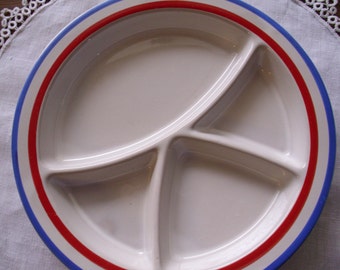
The caffay offered a good old Southern noon dinner, from the hands of Mattie and Pearlene, who had trod the boards of that kitchen from our parents’ days; those two round laughing women with  their shiny dark faces and white nylon dresses could turn out some scrumptious fried chicken and peas and cornbread, serving great ladlesful onto those divided plates, even though the crockery levees did little to save the potato salad from the chicken gravy, or the cornbread from the juice of those tongue-curling beet pickles.  The plates came out of the kitchen, held level and straight, with Mary Olive or Nancy trying hard to keep an errant thumb from the food, and were set down on that shining red counter or table as gently as a noon-o’clock rush could allow.

Huge, carb-and-grease meals, endless gallons of sweet tea, and loud laughter punctuated the farm and politics discussions at most of the tables, as the store-clerks and bank tellers and city hall workers had their own quiet lunches together---a simple bowl of beans and cornbread, or a Paminna Cheese sandwich, and silently returned to work, their token dimes under each plate at the counter, perhaps a quarter from a planter or lawyer at a table.


But Miss Florrie now, she was a character---nobody could remember how many husbands she’d had (one twice), and we girls all wanted to watch sometime as she got her makeup on.   We could just visualize her in her bedroom, sitting down in a black slip and mules to that three-fold mirror on her dresser, reaching out with ease to the bottles of foundation, the small round compact of rouge.   A good rub with the little puff-pad, a little shake to remove the extra, and then a perfect circle, bright as an apple on each cheekbone, like the Kewpie dolls on the Punchboard at Aunt Lou's store. 


A couple of us had dolls with such gaudy countenances, and we always referred to them as Miss Flow-rie dolls, kinda wishing and kinda shuddering away from the idea of being old enough to decorate our own faces in such a manner.

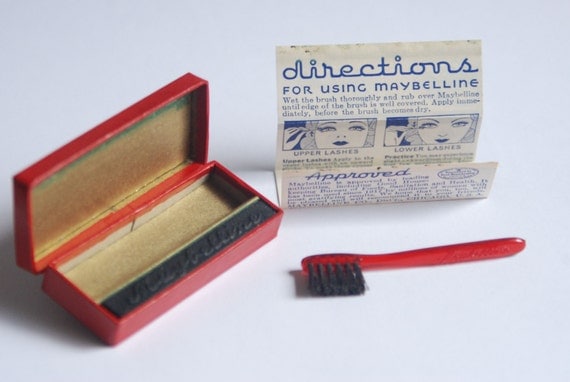
We talked about her a little bit, in young-girl fashion, wondering idly if she put on her Maybelline like the teen girls in the bathroom at school---wetting that tee-ninecy red doll-toothbrush under the faucet, or spitting onto the little ridge of black mascara in the box.   A scrub down the channel, then an eyebrow-held-up with one finger, as  the mascara was scooped on from beneath in that curvy lift that deposited the sticky black onto lashes and skin.  We were mightily interested in the mechanics of the so-mysterious older privileges accorded our elders, and I’m sure we stared at Miss Florrie an inordinate amount, for I can remember that she was a bit of a caricature, as well as an almighty presence, with her bright cheeks and black-ringed blue eyes, and that impossibly black hair held up by all those crinkly pins.

A little bit like this, but a deep dark melted-and-poured coal black---a black beyond the midnight dreams of Miss Clairol herself.    Now imagine the rouge as a little red clown circle high on each cheek, and it’s CLOSE, even to the immaculate outfit.


She always smelled nice---not a whiff of fried chicken or the scent of boiling broth or chopped onion (all of which wafted from the pass-through to the kitchen, but which somehow bypassed her magnificently pristine self), and she was as immaculately dressed and wrinkle-free, with her lipstick and rouge as smoothly red at closing time as at breakfast.


She was an institution in our town, a character and a landmark (Meecha at Miss Florrie’s) and a congenial, welcoming presence in that small corner caffay.  I don’t know when she WASN’T there, and don’t know when she closed or passed away or moved, for we were up here by then.  When we went back for my class reunion several years ago, we found only a bit of rubble where the bright fragrant old gathering
-place had stood.

Chris wandered for a moment, bent, and picked up something from the concrete foundation.   He came back and handed me a heavy little souvenir:  A four-inch piece of that so-remembered floor, the tiny black and white tiles still dignified and smooth---I like to think that the little scuff top right is maybe from our Saddle Oxfords or one of the cool guys’ motorcycle boots. 


And there you have it---Full Circle from a cheeky little flowerpot to bit of the past which has lain for years in my own flowerbed.  It’s nice having a memory I can hold in my hand.


MR WOLFE HAD THAT RIGHT


The stone was still here beside me on the desk, just now as I sat down with my first cup, and I gave it a fleeting fond glance before I tuned in to the world.   It’s on a white paper plate, for just as I went out to retrieve it from the hosta bed yesterday, the sun went scurrying behind a great bank of clouds, from which it has not peeked even a ray from then til this.    I brought the small bit of concrete into the house, its white flat scrabble-tiles intact and stuck tight, like a raft on an iceberg, and put it beneath the big sunny light of the breakfast table, with all the white surround to reflect and enhance.

The color in yesterday's picture was chosen from about nine offered in a little peacock-flash of color icon on my phone, and I chose it because it was almost the perfect sepia of the pictures of that time---didn’t a lot of us think as we looked at pictures of Grandmas and Aunts and Uncles in their prime, looking out sternly from the black blotter-pages of those wide scrapbooks and heavyweight small albums---didn’t we imagine that the whole world of our forebears must have gone on, day after day, living and dying, commerce and love and cooking and art---in those pale goldy-tan tones?


That's my Mammaw, top right. 

When I returned from getting my second cup, I reached out a hand and laid it gently on the cool tiles, still rock-solid these eighty-something years, and felt the unyielding flat  IS of it---that Mississippi mosaic which has been just THERE for life and death and wars and unrest and times of unspeakable heartache and joy.   The flat little unassuming face of the tile, with its two-faces-of-the-coin colors, and that pound of gray concrete poured and laid by long-stilled hands---that’s just something to think about.  This piece, had Chris not found it, would have still been there in that hot Delta sun season after season, amongst the other rubble of the site, or brushed and shoveled into a pile of like shards, tumbled back into the earth, with no meaning, no use, no history worth remembering, and nobody to care.


XXXXXXXXXXXXXXXXX Addendum, November 1


I STAND CORRECTED---however formal those words, and antiquated in phrasing, they DO apply.   The floor IS still there, in all its black-and-white semi-Harlequin glory.  Amidst the desolation of the streets and stores of that small section of town, that flat, dusty mosaic stands memorial to our small part of its history, and I seem to have one of the few broken shards.  AHH, if those tiles could talk, they'd speak of our small Buster Browns, our black and white saddle oxfords, our first high heels and scuffed sandals, as well as the tracks of farm boots, high-tops, penny loafers, motorcycle boots, flats, wedges, and wing-tips, in and out day after day. 
XXXXXXXXXXXXXXXXX


I’ve been reading the Outlander series, about a woman in 1945 who was transported back two centuries into warring Scotland, merely by touching one of the historic Circle Stones she was visiting on holiday.  And as I held my hand today on that cold flat bit of my own history, I closed my eyes and tried to imagine the doorway---that portal to 1957, with just a whiff of hamburgers frying, a burst of loud laughter from a tableful of hard-working men echoing down that kaleidoscope corridor, and the bright red and white of Miss Florrie’s Caffay, set in a movie of Time and Place and music and colour and the innocence of our teenage selves.


It would be close in that windowed space, the crowded  booths lively and loud, the air redolent of good coffee and burgers frying and the whiffs of Woodhue and spray-net and Miss Florrie’s Toujours Moi.   An underlying note of winter-long woolens and barely-aired mothball-stored items, as well as the Vitalis and Aqua Velva aura surrounding the leather-jacketed young men.  Scent and colour is as vivid in the the scene as the Rock ‘n’ Roll on the radio and the wasptail pepper-sauce in used Tabasco bottles on the tables.
 
Just being in the place for an evening, a quiet supper with the family, the men with their after-work hair slicked down, speaking across the aisles, and the Mamas admiring a new baby two booths down, was a homey thing.  My parents ordered The Special, and I the requisite hamburger---disappointed, somehow, that it came naked on a plate, without the crackly little wrapper to release that singular, tongue-curling mustard-pickle-and-onion scent when it was rustled open.   There was no rush, no splendor to the evening, just relaxing in a familiar place, plates pushed back and a cup of coffee alongside a slice of Pearlene’s pie, and the world was as right as it was gonna be for a while.


. But I know i wouldn't want to retrace it---not for all the decades between, not for the do-overs or the remarkable Firsts or the wonderful moments, the missed opportunities---nope, wouldn’t return.  Not for any disappearing dreams of yesterday, but it’s fun to imagine.  Perhaps for a Friday night or two, after a ball game, flushed with victory, and when the energy and the reds and whites and voices were like fireworks under a roof, or a quiet afternoon with girlfriends, our four sets of petticoats subdued beneath the table, as we sipped Cokes and shared secrets.  Ginger would lean close and whisper, "There's a baw-eh, and he LIKES you,” and that first   little heart-swell of romance would flutter into being.

But there’s no returning, no re-take, no second spin of the wheel.    There’s just so much a rock, no matter how embued with nostalgic magic, can do.


Monday, August 29, 2016

MISS DELOIS WALKER


For those of you who have remarked that Paxton is such a pleasant place, and that the people all seem so NICE---there ARE warts, and there are prickles and stings, but we try hard to ignore them.

Miss Delois Walker was a Mrs. at one time in the past, but the Mister is no longer in the picture.  I don’t know if they divorced, or if they had a fallin’ out, or even if he just got tired of her bossy ways and slunk off in the night/with another woman/had a nervous breakdown and got committed, or any of a dozen ways to leave your impossible-to-love lover.   Her Mama said she cried and carried on for ever so long after he left, but only because of What People Would Think.   And her Mama also said that Miss Dee-Lawis got up on a High Horse when she was still in a High Chair, and never did come down off of it, no matter how they tried to please her.

She doesn’t laugh or anything at your misfortune, so I don’t think she’s just mean, but she certainly states her opinion of whatever folks do or don’t.   Miss Dee-lawis is not a happy woman.  She not only is not happy, she just goes about it in a lot of unpleasant ways.  She carries a cloud, she does, and mostly she IS one.  And she’s a past master of using derogatory dismissals:

“Well, you kin jes git GLAD in the same step-ins you got MAD in!”

“Well, if you’re gonna be THAT way about it.”

“Well, IIII wouldn’t, but just do what you want to.”  SNIFF

“It’s up to yew.”  SNIFF

“You’re not wearin’ THAT, are you?”

“Who on God’s Earth cut-chur hair?”

“Well, jes’ BE that way, then.” SNIFF


And she has a way of criticizing anything she considers high-toned or lofty or big-headed, without even opening her mouth---well not very wide, anyway.

She always wants to know where you’ve been, who you saw, what you bought, what you did there.  And if any of the trip’s or evening’s or day’s jaunt included any of the high-falutin’ things she doesn’t cotton to, she has an exasperating habit that would irritate the robe off a saint.

She makes her mouth into a little tight round like a Cheerio, tilts her head a little bit toward one shoulder, shakes her head a little bit with her eyebrows up and eyes closed, and makes the most obnoxious little inhaling whistle.   I just never saw the like---the moment she finds out you’ve enjoyed the Opera, or a dance recital, or bought a subscription to anything other than Woman’s Day or Redbook, she does that little head-thing that must require a lot of co-ordination or practice, one.

I vote practice, because like Aint Ruby, who was JUBUS of things and folks,  Miss Dee-Lawis is critical, but mainly of things she is not a part of---the Bailey girls’ debuts at the Jackson Cotillion, for example.   That was Puttin on the Dawg, and givin’ it a hat, both.   Those girls’ Mama had just got WAY above her raisin’ and just because she married money, she had no call to go flauntin’ her checkbook like that.  The very idea.


She even put in to be the town correspondent for the County Paper one time, since she knew so much about every little thing that happened around the town.  She was gently declined in favor of Carlisle Emerson---Carlisle having a typewriter and a couple of years of college, and all.   And besides, Carlisle talked nice about people. 

Miss Dee-Lawis will zero in on a  wedding in which the flowers were ordered from OFF, or a party with a TENT, and that time the Covingtons and Heafners went in together and had that truck of seafood brought up from the coast from Gollott’s for their kids’ graduation party---oh, my.   Why, that last one kept her in a ruckus for weeks.

And when she and Miss Mavis Meeker get together---the whole town glows from the burnin’ ears. 


Sunday, August 28, 2016

MISS MAVIS MEEKER


Miss Mavis Meeker was a flappy-clothes, tall lank lady who loved gossip, and she could insert her beanpole self into the tiniest niches---for hiding and overhearing, or for barging in and asking.  It seemed as if carrying around all those rumors kept her thin as jogging, for she was the one who “sold out” from the Fund-Raiser Tea before scones, to get home to the phone when she heard that old Mr. Halliburton got caught retrieving his hearing aid from the back seat of a married lady’s car. 

She had a need-to-know like no one else in Paxton, and her curiosity grew with each year of her inquiring life.   She’d drive out through the country roads, looking and scanning and taking note of who had nice yards and who’d just had a dish installed and if the Covingtons' children were visiting.   She’d go through an unfamiliar place, and would turn around and come back down the road to see if she could see a name on the other side of a mailbox, frowning and getting a grump on her face if she didn’t, for she simply MUST know who lived where, even if she didn’t KNOW the who.

She traded in “good works” in her information quest, walking an apronful of tomatoes from her garden down the street to the house where a strange car had been parked for several days, trying to peer around the door when it was opened, to see if the Boyette girl had left her husband again and come back to stay with her Mama 'n'em.   If ever a stranger or anyone in law enforcement knocked on a neighbor’s door, she’d make sure she was outside with some little chore so that she could hear or see whatever happened, or she’d grab up a few flowers and take them innocently over just for an excuse to hang around.

She was the first to take a dish by the home of the bereaved, and also took pains to be the first to view a corpse.  She’d been known to wait outside the funeral home in her car til they opened the doors.  She’d stand right by the casket, looking her eyes full, and then  would circle the room like a name-dropper at a cocktail party, pronouncing how the departed looked---from Natchrul to Peekid to They Did All They Could, with a sly peek at the listeners for their reactions.   Closed casket funerals put her off kilter for a week, not being able to assess the make-up, or if they were wasted away, and all.


Being first at the house after the news spread of the death was important, so she could see “how they took it.”  Folks in town swore that  she had four cakes, two casseroles and a banana puddin’ on hand at all times---no WAY she could whip up a dish that fast. 

If Evelyn Couch, inquiring after Ont Vesta in the nursing home, were as nosy as all get-out, and a tee-nincey bit on the obnoxious side, she’d have sounded like Mavis Meeker. 


Miss Mavis would approach a lady, dozing in her wheelchair in the hall---the fact of the lady’s being in Golden Years had, in Mavis’s mind, conferred an immediate mantle of senility upon check-in.   She thought of them all as having been “committed,” as one would have been to Whitfield, the moment they left their own abodes to live at “The Home.”


But she visited them just the same, thinking that if any geriatric mind-mishap might have dampened their filters, she could just ask anything about anybody, and they’d give her the answer.   If they remembered it.   Like where DID the Finch girl go that time when she left school to travel Europe with her Aunt, or who WAS it that Harliss McIntire was with up at Clarksdale that time Mac shot the tires out on her Cadillac? 


She’d arrive at Golden Years, look up and down the halls for a likely victim, and home in.   She wasn’t above going right in a door where someone was sleeping, making herself at home, and rustling about a bit to wake the unwary soul, and had no qualms about asking prying, pointed questions. 

 Until Miss Martha Bridger, that is, who had never had much of a filter to start with, and had taught sixth grade boys for enough years to inure her to any inquiry, expletive, observation, or gesture. 

“Miss Marthy!!” Mavis trumpeted, apparently also convinced that passing eighty rendered her victim deaf, “Do ye know who Aaah ayum?”

A long, testy no-nonsense teacher-look from Miss Martha, and a little complete-circle-like-clock-hands of her tight-pursed lips before she spoke.

“AA’ve known ye all yeh lahfe, Mavis, and ye habm’t improved.”


Sunday, April 12, 2015

AINT RUBY


Amanda's Aint Ruby was JUBUS of things---she was jubus of anybody in politics; she was jubus of a new preacher til he proved hisself, and she was WAY jubus of the new hymnbooks when her church replaced the sung-out Broadmans, because Rock of Ages was not on page 103 anymore, and she could remember it because 103 was the reddio station where Preacher Agar could be heard at seven every Friday Night and nine on Sunday, when all good folks oughta be home, anyhow.

She and her family would come and visit with her sister Miss Floy ‘n’ ‘em in Paxton perhaps once a month, spending a weekend as the hosts and their family counted the minutes til three o’clock on Sunday, when they always departed, so as to “be home by dark.” That the hour of departure remained rigid even in the plentiful sunlight of Summer days was a Seasonal Grace granted to those who suffered her visits.

Miss Ruby and her family HAD things---a really big house, a huge Oldsmobile, land and a pond and every appliance and electronic device known to man. She dressed beautifully, even in her ‘duster” for First Cup every morning---it was always accessorized with exactly-matching little scuffs, and sometimes a co-ordinated headband in her wiry hair. She wore Capris often, with a shirt-tail-out blouse, either sleeveless, or with the sleeve cuffs ironed into starched creases sharp as the pages of a book. And she smoked. Nobody had any say in her smoking in the house---her reply was always, “Get used to it,” as she swung the umpteenth big old kitchen match through the air and blew little silvery dragon-snorts from her nostrils.

Everybody in the family was sorta afraid of her---her two older sisters and even her parents.  Amanda, Miss Floy’s oldest and quite a kitchen-whiz herself, helped her Mama all she could, letting her go relax on the porch with the company, while she did the dishes or cooked the next meal or baked a cake.   She left the chatting and socializing with Aint Ruby to her Mama and Grandma, letting them “get their visit out,” and keeping up with the chores because her Mama was absolutely wore plumb out just being with Aint Ruby for the weekend.

As they gathered at the dining table one Winter night, they sat down to a good hot hearty pot roast supper, with that big old silvery Magnalite roaster plumb full of tender chunks of beef and potatoes and carrots in a savory onion gravy, and side dishes of tee-ninecy English peas and three-bean salad.   Amanda was already a “dab-hand” with the biscuit-making, doing them just like Grandma Foshee always had, with a well in the middle of flour in the big pan, a BIG three-finger scoop of Crisco worked in with her fingers, and then the buttermilk, likewise.   Those were some of the best biscuits in the history of baking, and a big plate of them always sat on the table, supper or breakfast, if there was gravy involved.

Amanda and her sister set the table real pretty, and that night she’d put pickles and preserves and jelly into pretty little dishes, and poured the sorghum (a MUST for their Daddy,  when there were biscuits on the table) into a heavy little pitcher.

As the syrup pitcher reached Aint Ruby, she poured a generous pool over her biscuit, then, noticing an errant drop on the pour-lip of the pitcher, she raised it to her mouth, lapped out her tongue, and took a big old sidewise lolling slurp all the way around the pitcher-lip. looking impishly around the table as she went. She passed it on with a hearty, raucous laugh, as they all looked on in amazement and disgust.   On and on it went round the table with no takers---apparently nobody else really had a taste for syrup that evening, anyway. And Amanda made sure the remains got poured down the sink before she washed the pitcher.

 
From all the stress and work and dread of the visits, two of the things everybody remembers most about Aint Ruby concerned her cooking---she didn’t ever, as the saying went, “turn her hand” when it came to clearing the table or washing up, but would “help out” in the kitchen only when it struck her to barge in and insist on preparing a dish or two “the way EYE make ‘em.” 


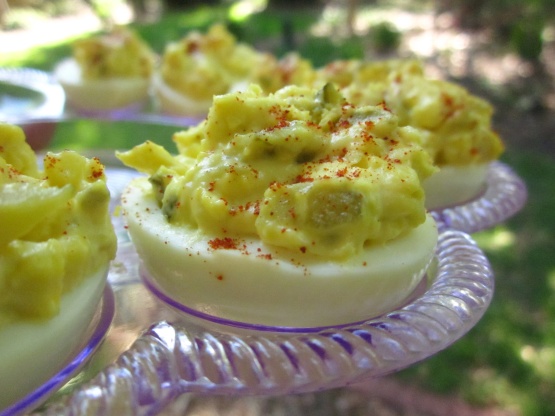
She always insisted on making the devilled eggs, and in addition to a big spoonful of pickle relish, she added several tablespoons of sugar into the mix, so that every bite went crunch. And a cup of sugar into the Cheese and Macaroni, cause that’s how her husband’s Mama made it, and that’s how HE liked it. Good thing---that made ONE who would eat it.

And all the rest of the family were mightily jubus of that macaroni, so Amanda always wrapped it up nicely in Tupperware for Aint Ruby,  “. . .for your supper when you get home, cause I KNOW you’ll be too tired to cook.”